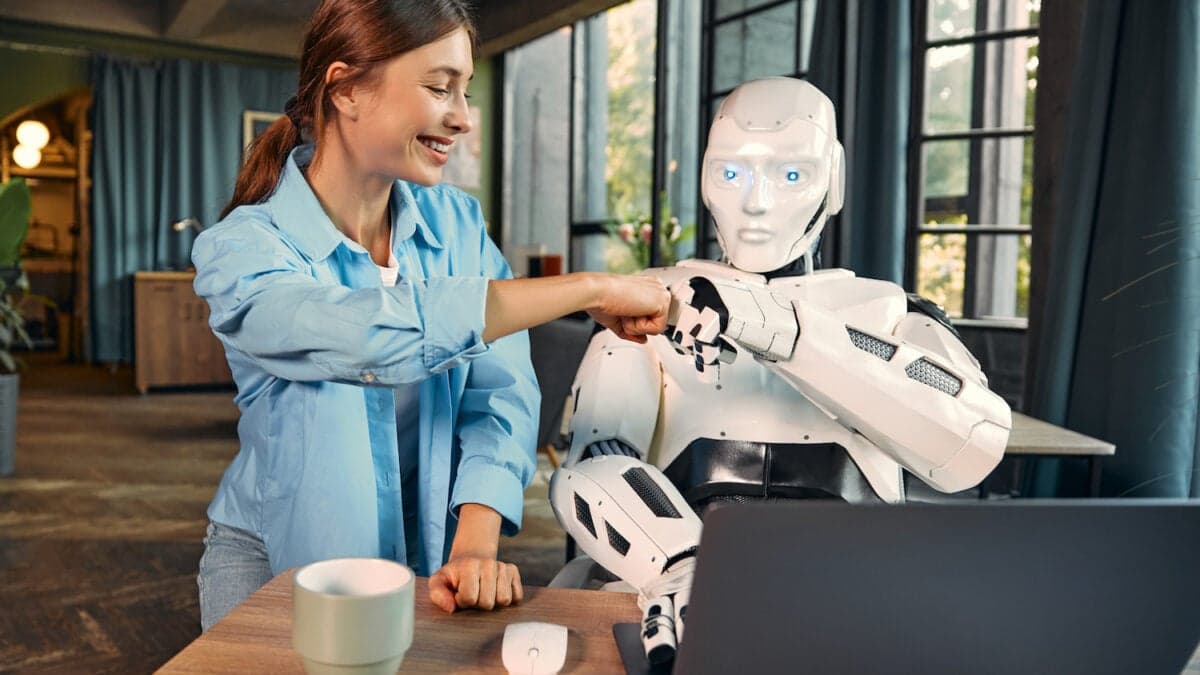
AI was supposed to make our work lives easier, but a new study suggests it might be doing the opposite: making us work harder. Researchers found that AI implementation at one company led to employees taking on more than they could handle, resulting in burnout and lower quality work. It seems the robots aren't quite ready to take over, and in the meantime, they're making us all a little crazy.
The Dark Side of AI Productivity
Researchers Aruna Ranganathan and Xinqi Maggie Ye from UC Berkeley’s Haas School of Business, writing in the Harvard Business Review, detailed their eight-month observation of a 200-employee tech company. The study revealed a concerning trend: instead of reducing workload, AI actually intensified it.The Workload Creep
The researchers termed this phenomenon "workload creep." It describes a situation where employees voluntarily adopted AI tools and started absorbing tasks they would typically outsource or justify hiring additional staff to cover. The initial enthusiasm for AI quickly turned into a vicious cycle of overwork."You had thought that maybe, oh, because you could be more productive with AI, then you save some time, you can work less," one employee told the researchers. "But then really, you don’t work less. You just work the same amount or even more."
The Ripple Effect
The problems didn't stop with individual employees. Engineers found themselves spending more time correcting AI-generated code produced by their colleagues. This created resentment and bogged down productivity.AI also led to increased multitasking, with employees manually writing code while AI agents generated their own versions in the background. This constant context-switching created a feeling of being "always juggling," according to the researchers.
Blurred Boundaries
Employees also found themselves using AI tools during lunch breaks, meetings, and even right before logging off for the day. This infiltration of work into personal time eroded the rejuvenating effects of downtime.The AI tools created a self-perpetuating cycle. They "accelerated certain tasks, which raised expectations for speed; higher speed made workers more reliant on AI. Increased reliance widened the scope of what workers attempted, and a wider scope further expanded the quantity and density of work."
The Broader Trend
The Berkeley Haas team's findings align with a growing body of evidence challenging the promised productivity miracles of AI. A MIT study found that the vast majority of companies that adopted AI saw no meaningful growth in revenue.Other research has shown that AI agents frequently fail at common remote work and office tasks. One study even documented employees using AI to produce shoddy "workslop" that their coworkers had to fix, breeding resentment and hindering productivity.
Employees remain ambivalent on the tech. A recent survey found that 40 percent of white-collar workers not in management roles thought that AI saved them no time at work.
The researchers suggest companies implement stronger guidelines and structure for AI use. However, it's clear that AI can easily create negative knock-on effects that are difficult to manage.
The Bigger Picture
- AI implementation requires careful management to avoid overburdening employees and negatively impacting their well-being.
- Companies need to focus on clear AI use cases and provide adequate training and support for employees.
- The promise of AI-driven productivity gains should be viewed with skepticism, as current evidence suggests limited impact.
- Increased transparency, guidance, and regulation are needed to address growing AI anxiety among workers, per EY research.
- Empathy and ethical leadership are crucial to balancing AI integration with employee well-being.