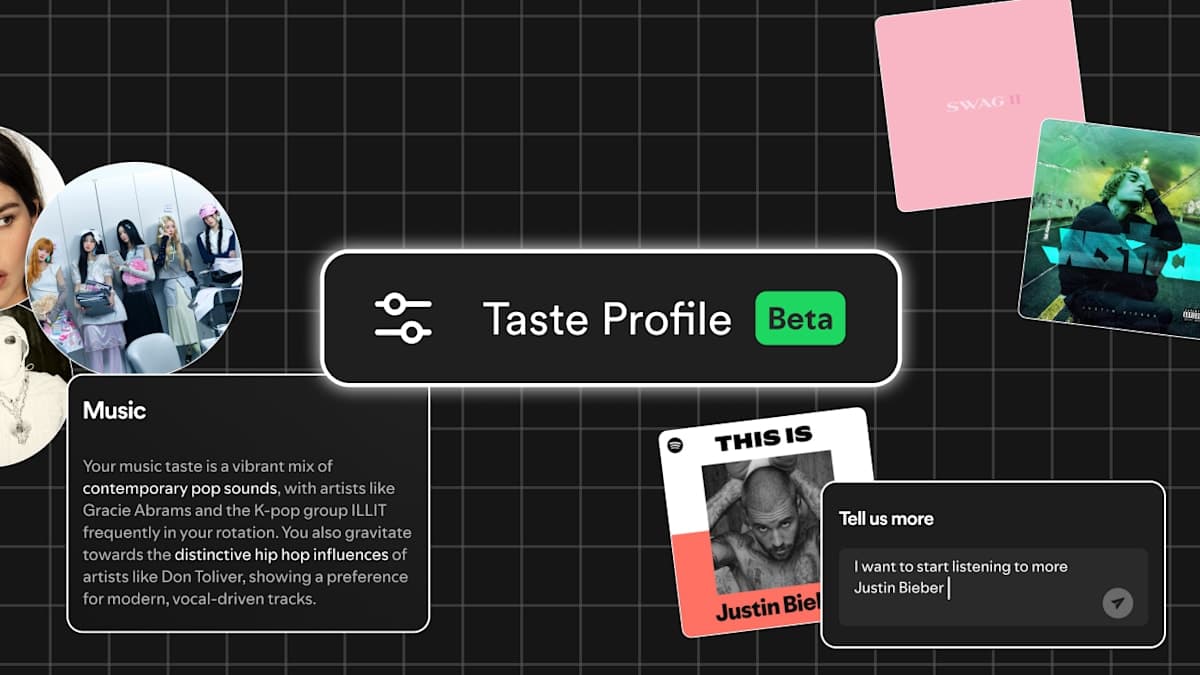
Spotify is letting Premium subscribers directly edit the algorithm that powers their recommendations. The new Taste Profile feature, announced by co-CEO Gustav Söderström at SXSW, gives users full visibility into the data model behind Discover Weekly, Release Radar, and Spotify Wrapped, according to TechCrunch.
The beta launches in New Zealand first.
The pitch is simple: your algorithm should work for you, not the other way around. Users can view a summary of all their listening data, including music, podcasts, and audiobooks, in one centralized location.
A "Tell us more" prompt opens the door to fine-tuning: request more of a specific genre, remove categories entirely, or describe what you want in plain language. The system handles ambiguous prompts like "news podcasts for a commute," according to 9to5Mac.
New Zealand is not a random choice. Spotify used the same market to test its Prompted Playlist feature, which lets users generate playlists through natural language descriptions.
That tool launched in New Zealand, expanded to the US and Canada in late January 2026, and reached Australia, Ireland, Sweden, and the UK by February, according to The Next Web.
Why This Changes the Algorithm Relationship
Most recommendation engines are black boxes. Users influence them passively: skip a song, and the algorithm adjusts. Taste Profile flips that model.It turns recommendations into a conversation between user and machine, where explicit feedback overrides implicit signals. This matters because recommendation fatigue is real. Users who feel "stuck" in a loop of similar suggestions stop engaging.
By giving listeners direct control over the underlying model, Spotify addresses the core complaint without rebuilding the algorithm itself.
But here is the bigger picture. Spotify's latest Loud and Clear report shows that artists from 75 different countries generated at least $500,000 in streaming royalties last year, up from 66 countries the year before.
About half of an average artist's streams now come from outside their home country, per The Hollywood Reporter. As listening habits go global, personalized recommendations become the difference between discovery and noise.