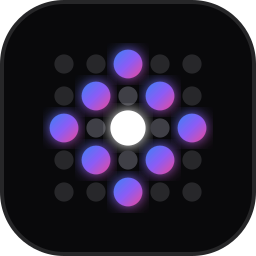
The line of thirds laid flat: a key's roots in a row with the step between each pair (on Aura a major third is one pad right, a minor third one pad up) and every chord as a clickable bracket over the consecutive notes it stacks, one lap and a bit so each chord appears whole.
Tailark core salesforce svg logo
One take on a seconds axis from host-prepared data only: min/max peaks on a canvas, a PreparedSpectrogramData heatmap (magma, log frequency) or both, with a Wave / Spectrum / Both toggle. Draggable, keyboard-steppable start/end and loop handles report take-normalized positions; playheads; a dimmed extension past the take end; a seconds ruler; and an overlay slot whose children read the same geometry from context. The axis latches during an overlay drag. The canvas repaints only when its peaks, colour or size change.
The piano keyboard painted with a sampler instrument's own facts: exact mapped-key coverage with every unmapped key muted per key, per-group coverage in distinct zone colours for a kit-style mapping, authored key colour ranges as instrument formats write them, and a playable range that mutes what the instrument cannot sound. Strike velocity, glissando, the held map and computer-keyboard input are the piano keyboard's. The sampler module's face and the Studio sampler editor draw this one control.
A key as a tonic and a mode: twelve tonic buttons coloured like piano keys on a Base UI ToggleGroup (arrow keys, aria-pressed, never cleared by a second press, at least 24px square, the tonic filled with the value colour), and a Base UI Select of grouped modes named by its visible label and read with its value, portaled fullscreen-safe with the face's theme. Refused tonics are disabled with their reason; both values may be unset with a placeholder; renamable labels; one row of twelve or two of six.
A headless controlled Scale/12-TET note-remap switch with compact and circle-of-fifths root-note selectors.
A list of random seeds as content-sized chips: a number field, a die and a remove button that show on hover or focus (always on touch). Stable keys across removes and adds (or the consumer's keys), focus to the previous slot after a remove, renamable labels (slot, die, remove, randomize all), refusals that disable with a reason, and the add and Randomize all actions either inline or as a SeedSlotsActions part of 24px icon buttons for a row header. The consumer owns the randomness.
The LED readout off the front of a rack unit — 7, 14 or 16 bars per cell, drawn as geometry rather than set in a font, because the thing that makes a real one unmistakable is the bars that are off: showing 1 still shows the ghost of 8. Around that: a recessed pane, a bloom on the lit bars, and light spilling onto the panel in proportion to how much of the display is lit. A plain value with a window of digits, or several captioned fields behind one piece of glass the way a multi-tap delay says what it is doing. Decimal points ride the cell before them, overflow truncates from the end the text is not aligned to, and the cells lean like every module in a rack does.
One choice out of a few as a pill track of pressed-or-not buttons on Base UI's ToggleGroup and Toggle (roving arrow keys, aria-pressed). Selection never empties; pressing the pressed option reports onReselect. The pressed option has a fill and an edge at least 3:1 against the track. sm/md/lg heights (md 28px by default) through the control-height variables, per-option tooltips and names, and a wrapping layout.
Canonical shadcn and Base UI select primitives with shared keyboard selection, focus return and document/fullscreen-aware portals.
Tailark core sequoia svg logo
Tailark core shopify svg logo
Tailark core slack svg logo
A time × frequency heatmap. Realtime scrolls an analyser; static analyses PCM; prepared renders bounded host-produced magnitudes at explicit timestamps without analyzing PCM in the face. Log frequency axis, six colour ramps, and the bin-to-pixel mapping is a pure exported function you can test or render headlessly.
An FFT magnitude display as bars or a filled curve, on a logarithmic frequency axis — because a linear one spends half its width above 10 kHz and crushes the bass into nothing.
Tailark core spotify svg logo
Portable SVG music engraving with spelled notes, rests, chords, beams, dots, triplets, ties and producer-supplied playback colors.
The LED-style chip a face uses to say what a facility is doing — AUDITION lit, HOST SYNC off, LIVE — in five states that stay tellable apart. The distinction it exists for is off (present, not engaged: label fully readable, lamp dark) versus dim (not available in this host at all: the whole chip recedes), because drawing "no telemetry from this host" the same as "telemetry switched off" tells the user something false about their session. warn is the second accent — on, but not the state you asked for — and live is the only one that pulses. Presentational and stateless: the host decides which state is true. data-status-chip and data-state let a face's render test assert on the state without matching on copy.
A compact controlled dropdown for rhythmic step divisions, styled by the UI kit theme variables.
The sequencer grid: steps across, lanes down, a page at a time. Tap a cell to toggle it, drag across a row to paint a whole stroke on or off, drag up or down on a lit cell to ride its velocity — with velocity drawn as fill height and brightness both, gate as the fill's width, ghost cells for computed previews, beat-group tinting, page tabs past 16 steps, and a playhead column driven by the host's clock, never by a display timer. Read-only it becomes a mini piano-roll, which is how the arpeggiator draws its computed line through the same cells a sequencer edits.
One row of a step sequencer, with three states rather than two: off, on and accent, because accent is a real louder hit and a two-state lane forces it into a second row the player has to keep in sync by hand. Press to cycle, or press and drag to paint the value the first step took across the row. The playhead takes a fractional position, so a face animating from the audio clock draws a line that travels instead of a light that arrives after the step has already sounded. Layout, the press/drag reading, the paint rule and the `.`/`x`/`X` pattern notation sit in a pure core beside it.
The parameter-side picture of a stereo image: an L-R field with a pan cursor the host can animate from an LFO phase, the width parameter drawn as a spread around it, mid/side balance bars, and a correlation meter whose lower half is tinted because correlation below zero is the mono-compatibility danger zone. Takes precomputed values, a live analyser pair, or a getStereoData callback. Pairs with lissajous-scope, which is the signal-side view of the same signal — this one is not a goniometer and does not try to be.
Tailark core stripe svg logo
Tailark core supabase svg logo