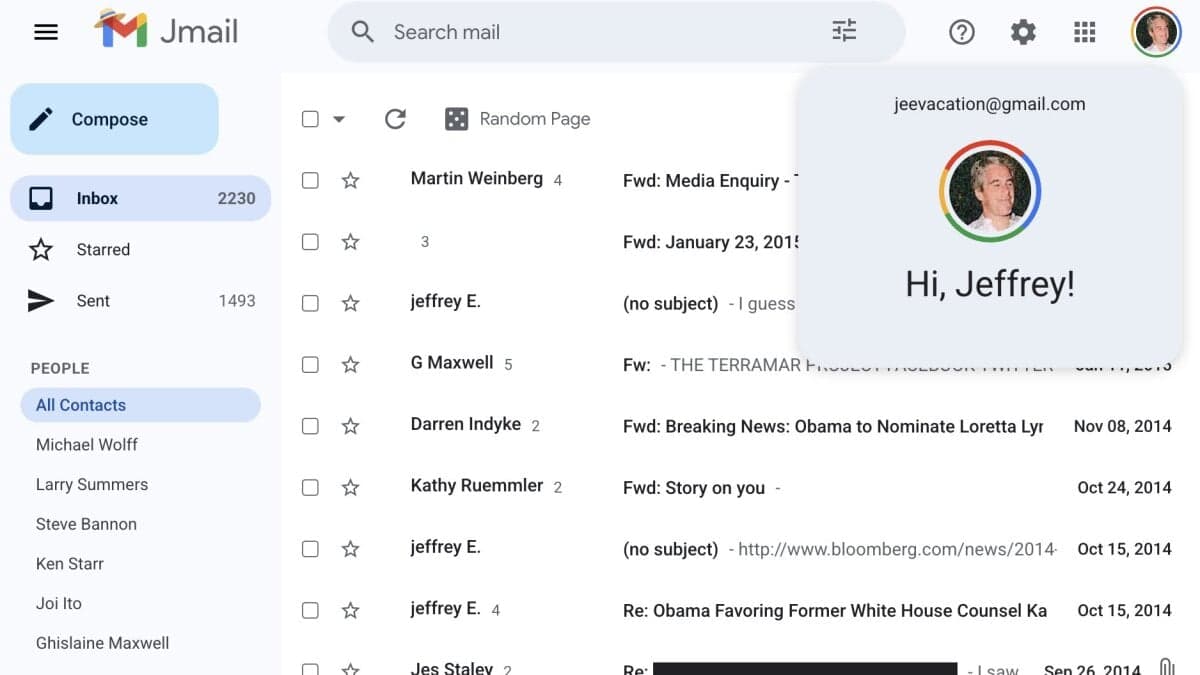
Navigating the ever-expanding trove of Epstein Files is a challenge. Jmail cuts through the noise, transforming a chaotic collection of documents into an easily searchable, interactive experience, and its soaring popularity shows it is resonating.
Jmail: A Google-Inspired Interface for the Epstein Files
The Epstein Files, a massive collection of documents related to Jeffrey Epstein and his network, continue to be released periodically. The latest release by the Department of Justice on January 30 included 3.5 million pages of documents, with 180,000 new images and 2,000 video files.From Chaos to Clarity
Sifting through millions of individual text files, scanned PDFs, and images is daunting. Jmail, launched in November 2025 by Riley Walz and developer Luke Igel, offers a solution. It recreates Epstein's email inbox within a Gmail-like interface, organizing the chaotic data into a familiar and searchable format.Jmail isn't just visually appealing. It provides a user-friendly way to search for names, keywords, and other information within the documents. "Inbox" and "Sent" pages separate emails, while a "Starred" page highlights interesting missives based on crowdsourced user data. A "People" section acts as a contact list of notable individuals who interacted with Epstein.
Expanding the Suite
Jmail has evolved beyond email, adding features inspired by other Google products. JPhotos mimics Google Photos, displaying released images. JDrive presents PDFs and other files in a Google Drive format. JFlights maps Epstein's travels, and Jamazon recreates his Amazon order history.Not stopping there, Jotify clones Spotify to stream released audio files, and JMessage provides a view of Epstein's text messages. Jemini, a Gemini-inspired AI chatbot (artificial intelligence model from Google that answers questions) , allows users to query the documents.
What's Next
Expect continued updates to Jmail as new Epstein Files are released. The developers seem committed to expanding the platform's functionality, incorporating new data and features. It will be interesting to see if new tools are added based on user feedback.Why It Matters
- Accessibility: Jmail makes a vast and complex dataset accessible to a wider audience, including researchers, journalists, and the public.
- Searchability: The platform's search functionality allows users to quickly locate specific information within the documents.
- Context: By presenting the data in familiar formats, Jmail provides context and helps users understand the relationships between individuals and events.
- Democratization of Information: Jmail exemplifies how creative web development can transform raw data into a valuable resource for public understanding.
- Ethical Considerations: The project raises questions about the ethics of replicating personal digital spaces, even when dealing with public figures involved in criminal activity.
Source: Mashable
Disclosure: This article is for informational purposes only.