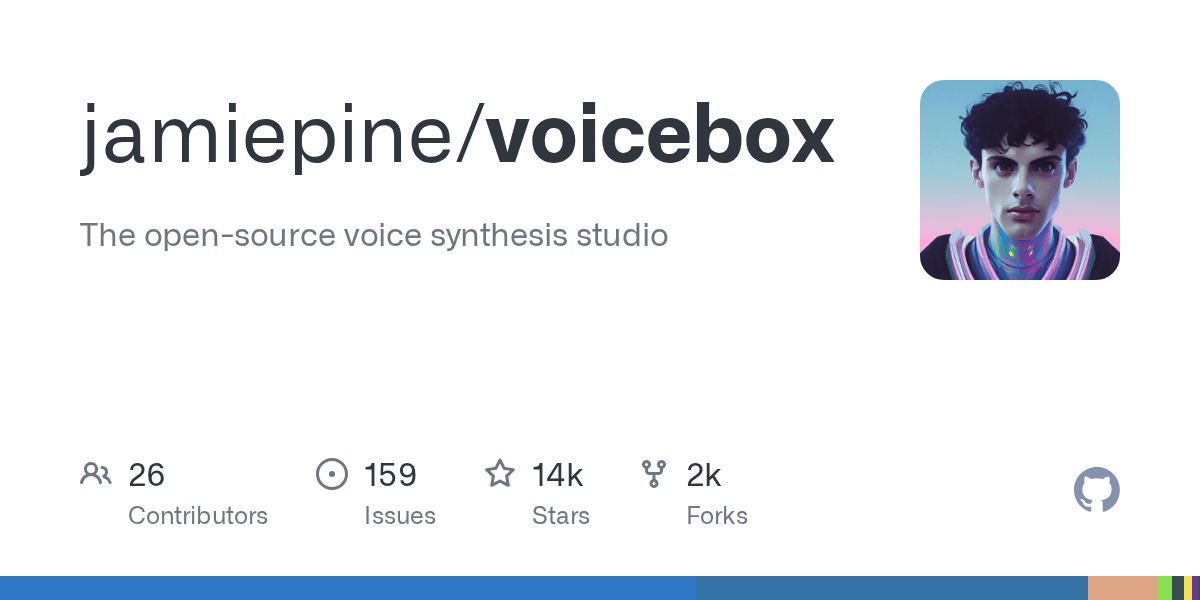

Voicebox, an open-source voice synthesis studio, is changing how creators and developers interact with AI-generated audio by providing a robust, local-first platform for voice cloning and speech generation. This powerful tool supports 23 languages across five distinct Text-to-Speech (TTS) engines, allowing users to create expressive, customized audio with complete privacy, as all models and voice data remain on the user's machine, according to its GitHub repository. With over 14,200 stars on GitHub, Voicebox delivers a compelling alternative to cloud-based solutions.
The platform goes beyond simple text-to-speech. It allows users to apply post-processing effects like pitch shift, reverb, and compression, mimicking the workflow of a traditional audio engineer. The ability to compose multi-voice projects with a timeline editor transforms how conversations and narratives can be assembled, offering unparalleled control and flexibility right from your desktop.
Built with Tauri (Rust) for native performance and a FastAPI (Python) backend, Voicebox runs efficiently across a wide range of systems. It supports macOS (leveraging MLX/Metal for Apple Silicon), Windows (CUDA and DirectML), Linux (CUDA, ROCm, Intel Arc), and even generic CPUs. An API-first design means developers can seamlessly integrate its voice synthesis capabilities into their own applications, opening doors for custom game dialogue, accessibility tools, or automated content generation. This local operation also provides an inherent security advantage, safeguarding projects from external vulnerabilities that have impacted other open-source tools.
This approach empowers users to experiment freely, iterate quickly, and deploy voice-powered applications without dependency on third-party services. The project’s commitment to open source ensures transparency and fosters community-driven innovation. Voicebox delivers a platform where creative ideas can be realized efficiently and privately, demonstrating that high-quality AI tools can be both powerful and accessible.
Voicebox is an open-source, local-first voice synthesis studio that allows users to clone voices and generate speech in 23 languages. It offers a private and customizable alternative to cloud-based solutions, keeping all voice data and models on the user's machine. The project has gained significant traction, with over 14,200 stars on GitHub.
Voicebox allows you to clone voices from short audio samples and generate natural-sounding speech. It also features a multi-track timeline editor and post-processing effects like pitch shift and reverb, similar to a professional recording studio. You can create intricate audio narratives, multi-voice projects, and integrate its capabilities into custom applications via a REST API.
Voicebox ensures complete privacy by operating locally on your computer. This means your voice profiles and generated audio never leave your machine, eliminating the data security concerns associated with cloud-based services. All models and voice data remain on your device, providing a secure environment for voice synthesis.
Voicebox is built with Tauri (Rust) and FastAPI (Python), supporting macOS, Windows, and Linux. It integrates five different TTS engines, including Qwen3-TTS and LuxTTS. LuxTTS is lightweight, requiring only ~1GB of VRAM and capable of 150x real-time generation on a CPU, making Voicebox versatile for various hardware configurations.
Local-first AI tools like Voicebox offer greater control, privacy, and cost savings compared to cloud-based services. By keeping voice data and processing on your machine, you avoid recurring costs and data security risks. This approach empowers creators and developers with a secure and customizable voice synthesis solution.
More insights on trending topics and technology

![[KDD'2026] "VideoRAG: Chat with Your Videos"](/_next/image?url=https%3A%2F%2Fres.cloudinary.com%2Fdeilllfm5%2Fimage%2Fupload%2Fv1774511565%2Ftrendingsociety%2Fog-images%2F2026-03%2Fhkuds-s-videorag-transforms-video-into-live-chat.png&w=3840&q=75)