ML System Design: 300+ Case Studies Curated
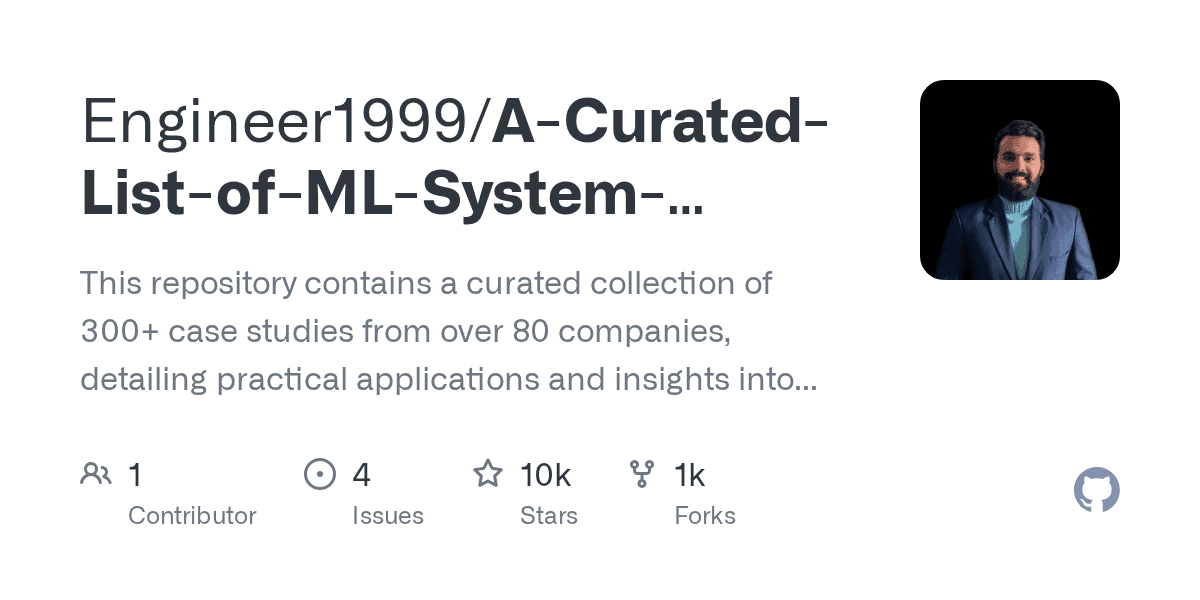
A new GitHub repository, "A-Curated-List-of-ML-System-Design-Case-Studies," offers an invaluable resource for machine learning engineers, compiling over 300 real-world case studies from more than 80 leading companies. This collection provides practical insights into how companies like Netflix, Airbnb, and DoorDash deploy ML systems in production, offering a blueprint for robust and effective AI development in a landscape increasingly fraught with security challenges and complex architectural demands.
Why Real-World Blueprints Power Better AI
For anyone building machine learning applications, navigating from theoretical models to production-ready systems often feels like constructing a skyscraper with only abstract physics equations. This curated repository acts as an architect's library, providing detailed blueprints of how top-tier companies actually built their AI solutions. Instead of guessing, developers gain access to the specific model designs, evaluation criteria, and deployment architectures used in real-world scenarios.This kind of practical insight becomes critical when considering the rising complexity and vulnerability of AI systems. Recent incidents, such as the supply chain attacks on Aqua Security's Trivy vulnerability scanner, underscore the urgent need for well-designed, secure ML pipelines. These breaches often exploit misconfigurations in automation environments, highlighting that robust system design goes beyond just the algorithm itself. The repository focuses on authentic, in-depth accounts of systems actively used in production, detailing how ML powers everything from fraud detection to personalized recommendations.
Designing Robust ML Systems
The "A-Curated-List-of-ML-System-Design-Case-Studies" repository, created by Engineer1999, categorizes its extensive collection to allow easy navigation by industry or specific ML use cases, according to GitHub. It covers a wide range of industries including tech, finance, healthcare, e-commerce, and social platforms. Furthermore, it delves into diverse ML applications such as computer vision, natural language processing, recommender systems, search and ranking, and fraud detection. This structured approach helps engineers quickly find relevant examples that mirror their own challenges, offering a roadmap for implementing solutions that are both effective and resilient.Just as Andrej Karpathy emphasizes the importance of reproducible calculations and unit tests in AI model development, these case studies offer a form of "auditing" by showcasing proven designs. By examining how companies like Netflix personalize video clips or how Airbnb improves travel search, developers can internalize best practices for constructing enterprise-grade ML deployments. The repository's detailed focus on target users, model designs, evaluation, and deployment architectures provides comprehensive information essential for building dependable and secure AI solutions, a stark contrast to abstract theoretical learning.