Advancing AI-Driven Biological Innovation
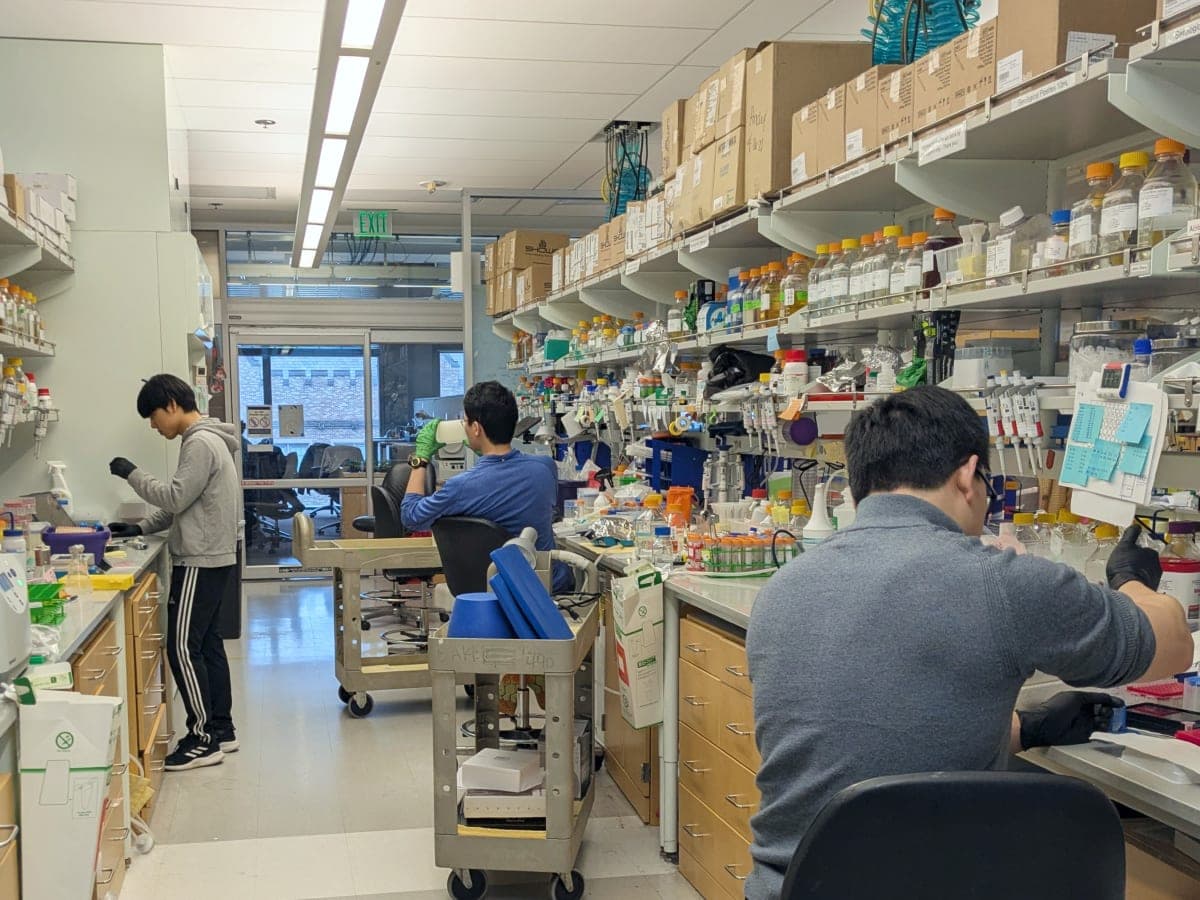
The new program will empower Baker, director of the UW Institute for Protein Design (IPD) and a UW biochemistry professor, to expand his pioneering work. Baker received the 2024 Nobel Prize in Chemistry for his use of artificial intelligence and machine learning to engineer novel proteins that never existed in nature. His research opens doors for entirely new biological functions.Enzymes, a specific category of proteins, are biological catalysts that dramatically speed up chemical reactions, essential for industries like pharmaceuticals, agriculture, energy, and manufacturing. With AI, scientists can now design these molecules from scratch, tailoring them precisely for specific tasks. This grant will help push this technology further and train a new generation of scientists.
The WRF provided nearly $200,000 last year to the IPD to develop the plan for this new initiative. Further support comes from philanthropist Sanford Weill, the Fund for Science and Technology (part of Paul Allen’s philanthropies), and the IPD Breakthrough Fund. The UW also provides additional office and lab space in Seattle’s South Lake Union area.
The IPD already has a strong track record, having launched more than 10 startups. Notable examples include PvP Biologics, which Takeda acquired, and Icosavax, acquired by AstraZeneca. These successes demonstrate the IPD's ability to translate complex research into valuable commercial entities.
Global AI Race and the Open-Source Advantage
Baker's foundational work in protein design intersects with the broader global race for AI dominance. While the U.S. AI capital expenditure (capex) cycle may be peaking, China's AI sector shows significant momentum, particularly in open-source development. The "OpenClaw craze" exemplifies this trend, where an open-source AI agent gained widespread adoption in China, according to Fortune.Chinese AI labs, including Moonshot, Minimax, and Zhipu, have released updates to their open-source models, fostering a robust developer community. This strategic embrace of open-source AI positions China's A-share market to outperform, even as its AI ecosystem faces scrutiny over data security and intellectual property, reports CNBC. The emergence of AI winners outside the U.S. is a clear signal for investors to diversify their focus.
This shift means that innovations in AI, whether in fundamental science like protein design or applied agents, are becoming increasingly global. The ability to quickly iterate and share models openly accelerates development, contrasting with more closed, proprietary approaches common elsewhere.