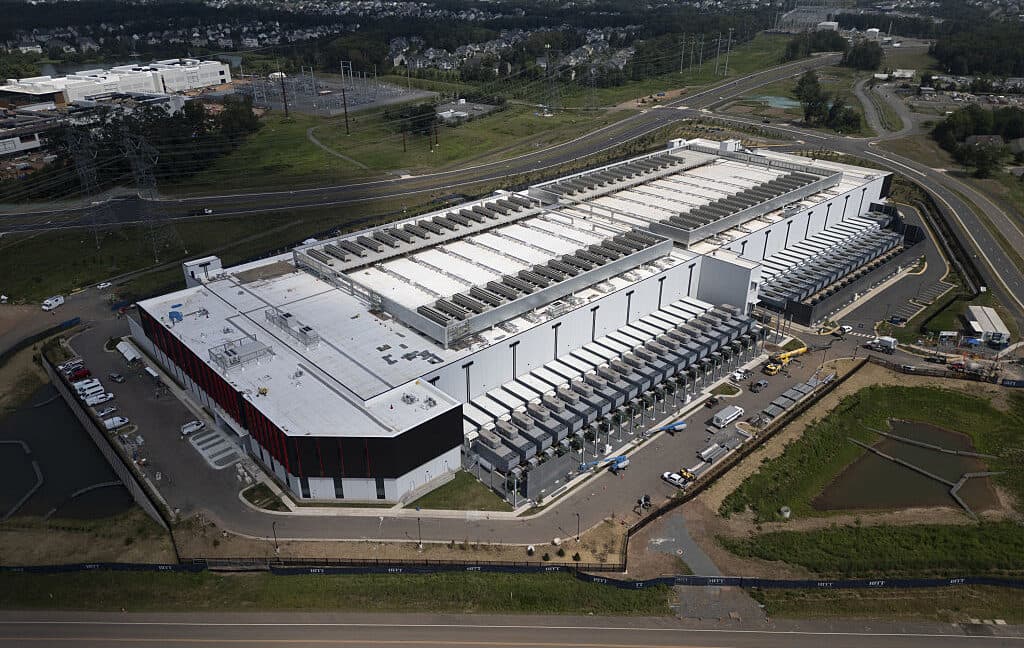
Major tech companies like Amazon, Google, and Microsoft are committing to build their own power plants for new data centers, aiming to prevent the massive energy demands of artificial intelligence from inflating consumer electricity bills. While hailed by the White House as a consumer protection measure, this ambitious pledge faces significant hurdles, including strained supply chains for critical components and questions about the long-term feasibility of independent power grids.
| Year | Projected Demand (Gigawatts) |
|---|---|
| 2024 | ~35 GW |
| 2035 | 106 GW |
Furthermore, many of these power sources, including standard gas turbines, are not designed for the continuous, uninterrupted power supply that data centers require. "They say, 'we have documented evidence that these can run 90 percent of the time'… But that’s not the average use case," said Jigar Shah, an energy investor and former Department of Energy official. He also highlighted long-term challenges in securing spare parts and qualified technicians to keep these dedicated power plants operational for decades.
Strategic Infrastructure Planning
With US data center power demand projected to more than triple by 2035, developers creating AI-intensive applications should consider the long-term energy implications and potential costs associated with data center hosting.
Supply Chain Awareness
Founders building or relying on extensive data center infrastructure need to be aware of the seven-year wait times for critical components like gas turbines. This scarcity impacts deployment timelines and costs, making energy independence a complex undertaking.
Regulatory Scrutiny
As states like New York and Oklahoma propose bans or closer scrutiny of data centers, businesses planning new facilities must carefully evaluate local regulations and potential legislative changes that could impact operations and expansion.
Cost Mitigation Focus
For consumers, despite Big Tech's pledges, local electricity bills could still see pressure, especially in data-center-dense states where increases reached 16-19% annually. Pay attention to local utility company communications regarding rate adjustments.
Tech giants are building their own power plants for new AI data centers to prevent the massive energy demands of artificial intelligence from increasing electricity bills for consumers. This initiative aims to supply power for new data centers independently, rather than relying on existing grid connections.
Data center power demand in the US is forecast to more than triple by 2035, escalating from approximately 35 gigawatts (GW) in 2024 to a projected 106 GW. This surge is driven by the increasing energy consumption of AI data centers.
The White House hosted executives from major technology companies to formalize a deal where these firms commit to supplying their own power for new data centers. This agreement aims to protect consumers from rising electricity costs attributed to the growing energy needs of AI infrastructure.
Residential electricity costs rose by 6 percent in February compared to the previous year, according to the US Energy Information Administration. Some states with dense clusters of data centers, like New Jersey and Pennsylvania, saw even steeper increases of 16 percent and 19 percent respectively.
Yes, several states, including New York, Maine, and Oklahoma, are considering regulations or even temporary bans on new data centers. This is in response to rising electricity costs and public concern over the energy demands of AI.
More insights on trending topics and technology