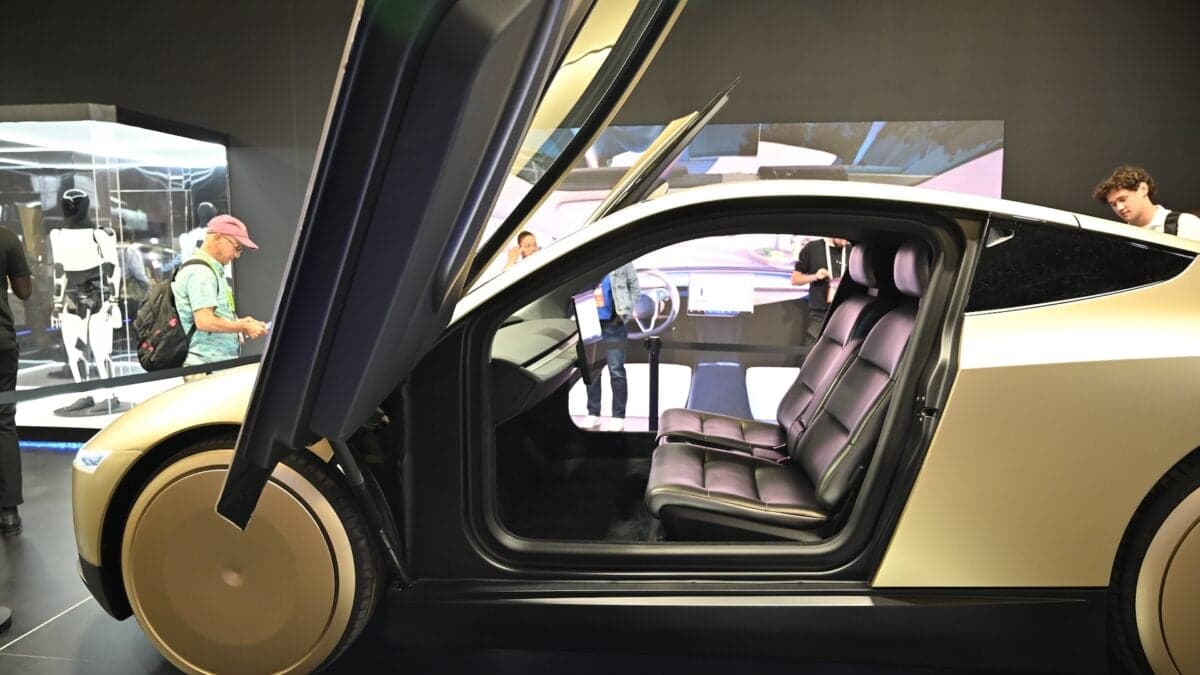
Notably, the Cybercab will launch using AI4 hardware. Critics point out that this hardware has so far failed to deliver unsupervised autonomy in Tesla's existing vehicles.
While Musk attributed these departures to restructuring, such a concentration of exits inevitably raises questions about the internal dynamics and direction of these ambitious projects. The timing of Nechita's departure, just days after the Cybercab's initial production, further amplifies these concerns according to industry experts.
Victor Nechita, the program manager for Tesla's Cybercab, recently left the company, raising questions about the safety and future of the autonomous taxi program. His departure came shortly after the first Cybercab production unit was released. Nechita's LinkedIn post alluded to "pushing the boundaries of safety," which has fueled speculation about potential safety concerns within the program.
The Tesla Cybercab is Tesla's purpose-built autonomous vehicle, designed to function as a robotaxi. It is distinct from Tesla's existing vehicles and relies on Tesla's AI4 hardware. However, the AI4 hardware has not yet achieved full unsupervised autonomy, raising concerns about the Cybercab's capabilities.
Yes, Victor Nechita's departure is one of several high-profile exits from Tesla recently. Managers from both the Cybertruck and Model Y programs have also left the company. These departures, along with exits from Elon Musk's AI venture, xAI, have raised questions about the internal dynamics and direction of Tesla's ambitious projects.
Tesla's autonomous driving technology has faced scrutiny, particularly regarding safety. The company shifted from promising "Full Self-Driving" (FSD) to offering "Supervised Full Self-Driving," which some view as a way to shift liability to the driver. Critics point out that the Cybercab will launch using AI4 hardware, which has so far failed to deliver unsupervised autonomy in Tesla's existing vehicles.
More insights on trending topics and technology