This innovative approach surfaces as Anthropic faces user backlash for new usage caps and changes to its subscription model, making efficient token use more critical than ever. Users are hitting limits "way faster than expected," especially on paid accounts, according to BBC.
The developer's "caveman" prompting method relies on a few straightforward rules to minimize output length and, consequently, token consumption. These rules include using short sentences, typically between three and six words, and strictly avoiding any pleasantries or preambles. Additionally, the technique mandates running tools first, displaying results immediately, and then stopping without any additional narration. For instance, instead of "I will fix the code," the AI is instructed to say "Me fix code." This directness strips away unnecessary linguistic overhead.
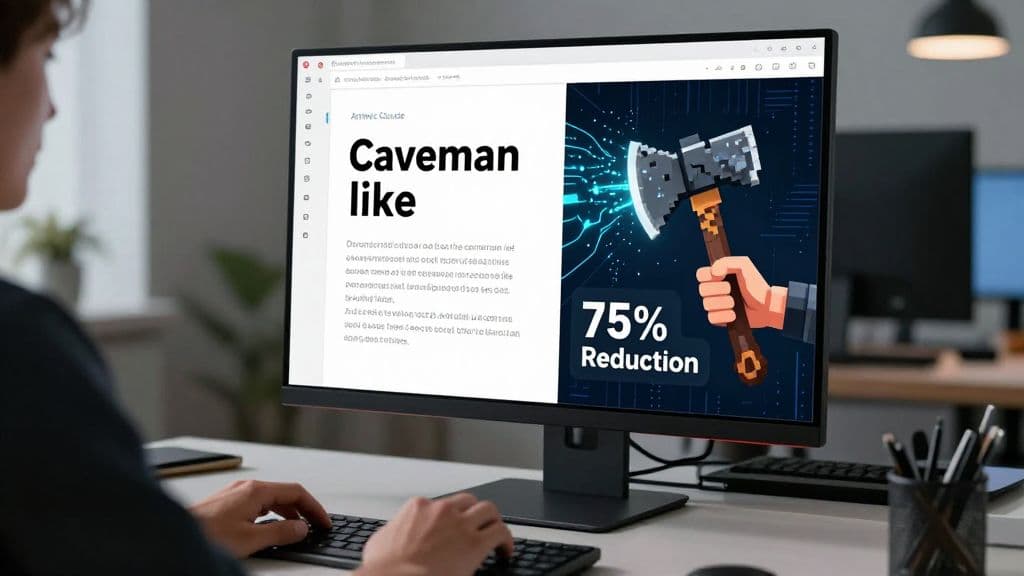
The impact of this method is significant. A typical web search task that might consume around 180 tokens with standard prompting can drop to approximately 45 tokens. This represents a 135-token saving per task, or a 75% reduction. Each "grunt swap"—replacing verbose AI output with a concise phrase—saves between 6 and 10 tokens. Over an entire task, this can lead to a 50-100 token saving, yielding a substantial 50-75% overall burn reduction when combined with a "tool-first" execution strategy.
The push for token efficiency comes amid significant shifts in Anthropic's service model. The company recently imposed stricter usage limits on its Claude chatbot, frustrating many devoted users. These changes have led to users, including those on paid subscriptions, encountering usage caps much more frequently than before, impacting their workflow, particularly for programming and coding tasks in Claude Code.
Further complicating matters, Anthropic has ceased allowing its Claude subscriptions to integrate with third-party AI agent platforms like OpenClaw. This decision stems from the "outsized strain" such usage places on Anthropic's compute resources, according to Business Insider Africa. Users leveraging these platforms now must transition to a pay-as-you-go model or use a separate API key, which charges per token rather than offering the flat-rate access previously available with Pro and Max plans. This effectively translates to higher costs for heavy users, making every token count.
Actively experiment with minimalist prompting techniques, like the 'caveman talk' method, and prioritize tool-first execution to significantly reduce token consumption and avoid hitting API usage limits on LLMs like Claude.
Implement internal guidelines and training for your teams on token-efficient prompting to mitigate rising AI operational costs and ensure the sustainable and cost-effective deployment of large language models across your enterprise.
Design user interfaces and default prompt structures within your AI applications that inherently encourage concise, tool-first interactions to improve user experience by reducing unexpected token consumption and associated costs.
Adopt a more direct and concise prompting style, eliminating unnecessary conversational filler, to maximize your usage within new token limits and subscription models for AI services like Claude.
More insights on trending topics and technology