Focus Features' new documentary, "The AI Doc: Or How I Became an Apocaloptimist," co-directed by Daniel Roher and Charlie Tyrell, aims to demystify generative AI but largely fails to provide insightful analysis. The film, reviewed by The Verge, is criticized for its hyperbolic framing, lacking critical engagement with experts, and overlooking AI's tangible impacts on industries like filmmaking, ultimately offering little beyond surface-level anxieties.
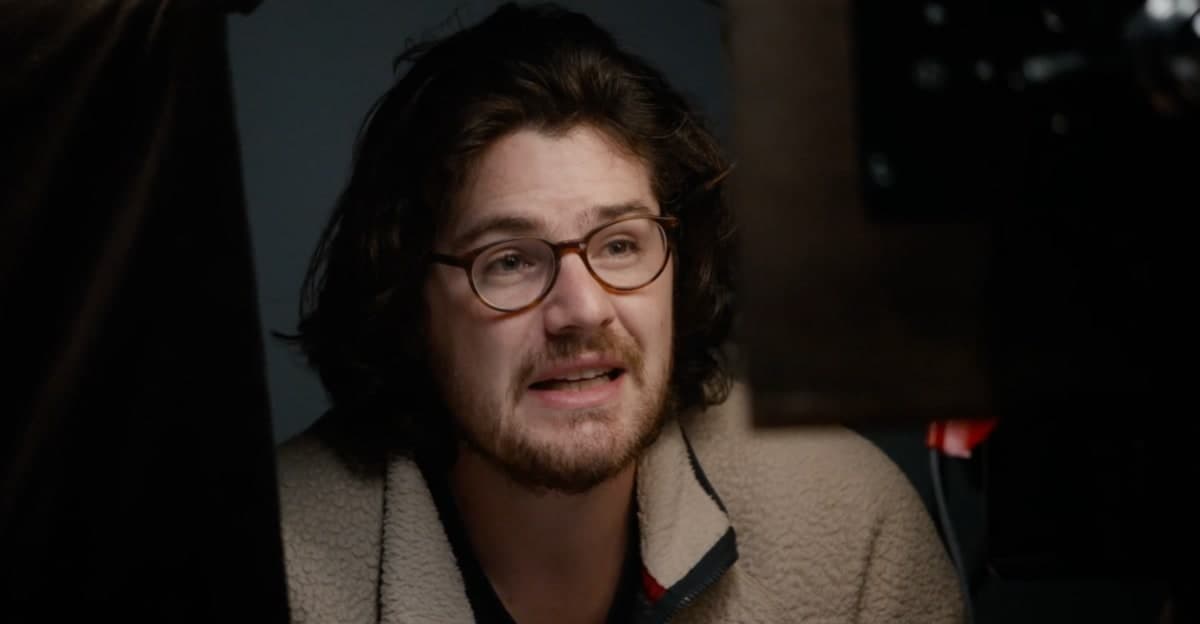
The rapid incorporation of generative artificial intelligence into daily life often leaves individuals confused about its function and implications. Compounding this, both proponents and detractors frequently employ exaggerated language, akin to fantastical ad copy, making it difficult to discern the technology's true nature. New iterations of AI products are released at such a fast pace that tracking industry developments becomes a significant challenge for the public. "The AI Doc: Or How I Became an Apocaloptimist" attempts to navigate the complexities of generative AI's rise, featuring conversations with researchers, developers, and company CEOs. However, critics argue that despite securing excellent access to these experts, the documentary makes little effort to use it effectively. Daniel Roher, who won an Oscar in 2023 for his documentary Navalny, centers the film around his personal anxieties about AI's societal impacts, particularly concerning his impending fatherhood. He embarks on a journey to understand models like ChatGPT, Claude, and Gemini, structuring the narrative into four acts that mirror his evolving feelings.
Roher initially interviews pessimists, such as Center for Humane Technology co-founders Tristan Harris and Aza Raskin, who portray AI as an existential threat. The documentary employs dramatic clips from films like The Terminator and The Matrix to illustrate doomsday scenarios. This fear-mongering is often seen as a tactic by AI firms to emphasize the seriousness of their products. The film then shifts to optimists like Anthropic president Daniela Amodei and LinkedIn co-founder Reid Hoffman, who describe a utopian future driven by AI innovations, including bespoke healthcare. This juxtaposition, while seemingly balanced, is critiqued for presenting hyperbolic outcomes without sufficient challenge, making the first half resemble an advertisement rather than critical analysis.
What the Documentary Misses About Real-World AI
The documentary's significant oversight, according to the review, is its failure to explore how AI is already transforming industries, including filmmaking itself. Despite heavily relying on animated sequences produced by Toronto-based studio Stop Motion Department, the film barely touches on AI's impact on creative professionals. This contrasts sharply with other perspectives, such as Chinese director Jia Zhangke, who used AI for a short film and noted that "movies have coexisted with new technology" from the beginning. China generally exhibits greater optimism towards AI compared to Western nations, where skepticism often prevails .Furthermore, the film's timing makes some of its interviews feel shallow. For instance, OpenAI head Sam Altman faced scrutiny for a deal with the Department of Defense to provide models for mass domestic surveillance. Concurrently, Anthropic CEO Dario Amodei was in conflict with the Pentagon over refusing unchecked access to its technology, despite the U.S. military reportedly using its tools for strikes against Iran. Anthropic had previously established two red lines regarding its AI tool Claude: no surveillance of American citizens and no use in lethal autonomous weapons. These significant developments, unknown to Roher during filming, underscore the documentary's inability to keep pace with AI's rapid advancements and complex geopolitical entanglements. The film’s brief third act, which acknowledges large language models (LLMs) as sophisticated pattern recognition machines trained on vast datasets, and briefly touches on underpaid human labor,lacks sufficient emphasis
.