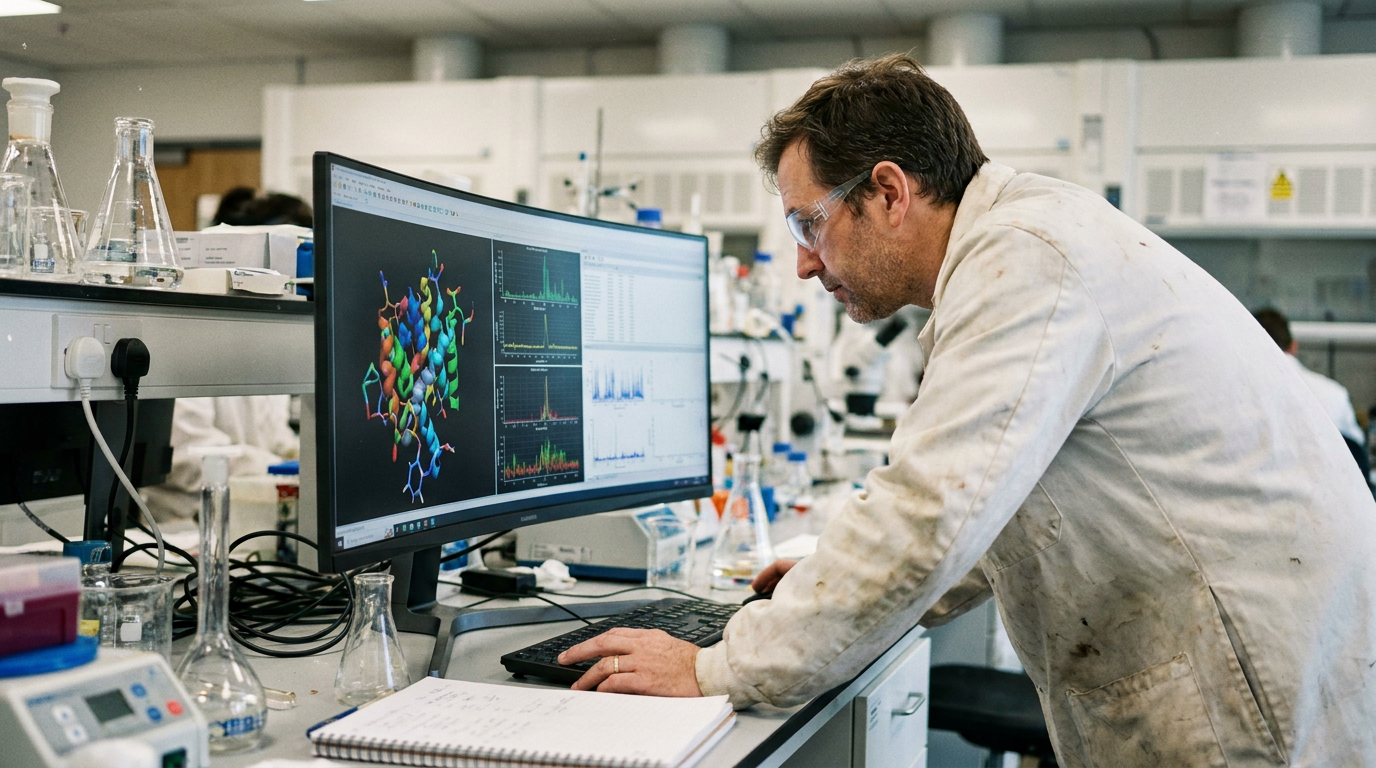
OpenAI announced an expansion of its ChatGPT for Academic Researchers program on November 16, 2026, aiming to provide free access to its AI tools for up to 200,000 researchers worldwide. This move follows a successful pilot program that began in July, which included 20,000 participants.
The expansion reflects a growing industry trend to integrate advanced AI into scientific inquiry. OpenAI's initiative allows eligible researchers and their collaborators to access ChatGPT Plus, offering a powerful resource for accelerating discovery. The broader goal is to democratize access to AI capabilities that can significantly reduce research timelines.
How Does OpenAI's Program Support Researchers?
OpenAI's expanded program supports researchers by providing free access to ChatGPT Plus for recipients and up to two collaborators, targeting 50,000 new grants. This initiative builds on a pilot that found AI tools can nearly halve the time required for research tasks. The program ensures data shared is not used for model training, addressing privacy concerns.The pilot phase initially gave researchers access to ChatGPT Pro. However, a review of usage showed most participants would have remained within ChatGPT Plus limits. This insight prompted the shift to Plus for new grants, extending access to more teams. Researchers use these tools for tasks like linking lab and patient data to accelerate drug development, as demonstrated by studies at Harvard Medical School.
The program also facilitates the creation of searchable databases from museum specimens, turning photographs into valuable research assets. The next round of applications opens on November 23, with grants awarded on a first-come, first-served basis.
| Program Aspect | Pilot Phase (July 2026) | Expanded Phase (November 2026) |
|---|---|---|
| Initial Access Tier | ChatGPT Pro | ChatGPT Plus |
| Collaborators per Grant | N/A (single user implied) | Up to 2 |
| Grants Awarded | 20,000 (in 33 countries) | 50,000 (new grants) |
| Program Goal | 100,000 researchers (implied) | 200,000 researchers |
| Selection Method | Lottery-based | First-come, first-served |
Who Else Broadens AI Access for Science?
Beyond OpenAI, other organizations also broaden AI access for scientific research through various programs and investments. Anthropic's AI for Science program, started in May 2025, partners with foundations to offer free Claude credits to researchers. The National Science Foundation (NSF) allocated $24.5 million to expand AI-ready data infrastructure for U.S. researchers.Anthropic has supported hundreds of projects across fields like biology, medicine, physics, and mathematics. They are now working with 20 scientific foundations and institutions globally. The NSF's investment, led by UC San Diego, will create the National Data Platform, connecting data, computing, and AI resources. This will make research data easier to discover and analyze, accelerating scientific discovery for U.S. researchers and educators. For deeper insights into how AI assists research, read about how ChatGPT's tools can steer deep research.