Voice-Pro: Clone Any Voice, Generate AI Speech

Trending Society Staff··3 min read·2 sources·GitHub
Voice-Pro: Clone Any Voice, Generate AI Speech

Key Takeaways

  1. 1Voice-Pro, a comprehensive AI voice cloning and dubbing application, is now completely free and open-source on GitHub, directly challenging paid SaaS platforms like ElevenLabs.
  2. 2The self-hosted tool integrates powerful AI models including OpenAI's Whisper, CosyVoice for zero-shot voice cloning, and Microsoft's Edge-TTS, enabling a full audio production pipeline from YouTube video processing to multilingual voice generation.
  3. 3Creators can save significantly, as Voice-Pro eliminates recurring subscription costs that can reach $23-$48 per 60-minute video on commercial platforms, requiring only initial hardware and electricity expenses.
  4. 4While offering immense value, users must manage a technical setup (over an hour, 20GB storage) and rely on the open-source community for future bug fixes and feature updates as developers shift focus.

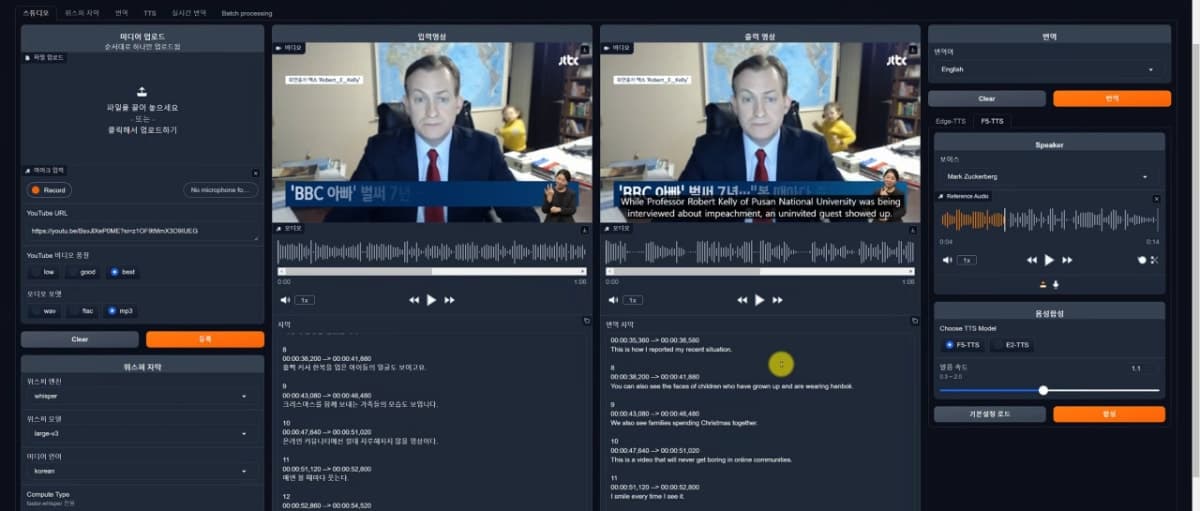
# Voice-Pro Goes Free, Offers Open-Source AI Dubbing Voice-Pro, a comprehensive AI application for voice cloning, translation, and video dubbing, is now completely free and open-source. The developers at abus-aikorea have ceased active development to focus on a new project, releasing the tool's full code as a powerful, self-hosted alternative to paid SaaS platforms like ElevenLabs. The tool packages a suite of cutting-edge AI models into a single Gradio web interface, allowing creators to build a complete audio production pipeline on their own hardware. It acts as a central hub for taking a YouTube video, separating vocals from music, transcribing the speech, translating it into other languages, and then generating a new audio track using text-to-speech or a cloned voice. Previously, Voice-Pro operated on a subscription model for unlimited use. As of version 3.2, all features have been unlocked and the project is now freely available on GitHub, per the repository's README.

What Technologies Are Included?

Voice-Pro integrates several popular open-source AI models to create an all-in-one workflow, removing the need to run multiple separate tools. Its core functions are built on a foundation of specialized AI engines:
    • Speech-to-Text: Uses various versions of OpenAI's Whisper, including Faster-Whisper and WhisperX for highly accurate transcription in over 100 languages.

    • Voice Cloning: Features zero-shot cloning with models like F5-TTS and CosyVoice, allowing it to replicate a voice from a short audio sample.

    • Text-to-Speech (TTS): Integrates Microsoft's Edge-TTS for over 400 voices, along with the high-quality `kokoro` model.

    • Audio Processing: Includes Demucs for separating vocals from background music and `yt-dlp` for downloading video and audio content directly from YouTube.

The application is designed to run on a local machine, primarily targeting Windows systems with an NVIDIA GPU, though it also has configurations for Linux and Mac.

How Does It Compare to Paid Services?

By going fully open-source, Voice-Pro presents a direct challenge to the per-minute pricing models of many commercial AI voice platforms. For creators producing long-form content like podcasts or video essays, these costs can accumulate quickly. An analysis included in the project's documentation, based on pricing as of April 15, 2025, highlights the potential savings. Processing a single 60-minute video for subtitles, translation, and dubbing can cost anywhere from $23 to over $48 on popular SaaS platforms like Maestra, HappyScribe, or Descript. With Voice-Pro, the only costs are the initial hardware setup and electricity. This makes it a compelling option for podcasters, YouTubers, and developers who need advanced voice solutions without recurring subscription fees.

The trade-off is the technical setup and maintenance. Users must install the environment themselves, which can take over an hour and requires at least 20GB of storage. The developers also note that with their focus shifting to their new WeConnect application, bug fixes and feature updates for Voice-Pro will now rely on the open-source community.

The Trending Society Take

The decision to open-source Voice-Pro is a significant win for independent creators and developers. It democratizes access to a sophisticated AI dubbing studio that was previously locked behind a paywall. This move empowers builders to integrate high-quality voice synthesis into their projects for free and enables content creators to globalize their work without breaking the bank. This is part of a larger trend where powerful, self-hosted open-source models are providing a real alternative to expensive, centralized AI services. For anyone willing to manage the technical side, the barrier to creating professional, multilingual content just got much lower.

FAQ

Voice-Pro is a comprehensive AI application designed for voice cloning, translation, and video dubbing. It has recently become entirely free and open-source, offering a powerful self-hosted alternative to commercial AI voice platforms like ElevenLabs. The tool allows users to build a complete audio production pipeline on their own hardware, from transcribing speech to generating new audio tracks with cloned voices.

Voice-Pro became free and open-source because its original developers, abus-aikorea, decided to cease active development to concentrate on a new project. By releasing the tool's full code on GitHub, they aimed to democratize access to advanced AI voice and dubbing capabilities, allowing users to host the solution themselves without subscription fees.

Voice-Pro integrates several cutting-edge open-source AI models to provide an all-in-one audio production workflow through a Gradio web interface. Key technologies include OpenAI's Whisper for accurate speech-to-text transcription, F5-TTS and CosyVoice for zero-shot voice cloning, and Microsoft's Edge-TTS and kokoro for high-quality text-to-speech. It also uses Demucs for vocal separation from music and `yt-dlp` for direct YouTube content downloads.

Voice-Pro offers significant cost savings compared to paid AI voice services, which often use per-minute pricing models. For instance, processing a 60-minute video for subtitles, translation, and dubbing can cost $23 to over $48 on commercial platforms, whereas Voice-Pro only incurs initial hardware setup and electricity costs. The trade-off is that users must handle the technical installation and maintenance themselves, which can take over an hour and requires at least 20GB of storage.

Related Articles

More insights on trending topics and technology

Newsletter

We read 100+ sources so you don't have to.

One email. Delivered weekly. The AI and tech stories actually worth your time.