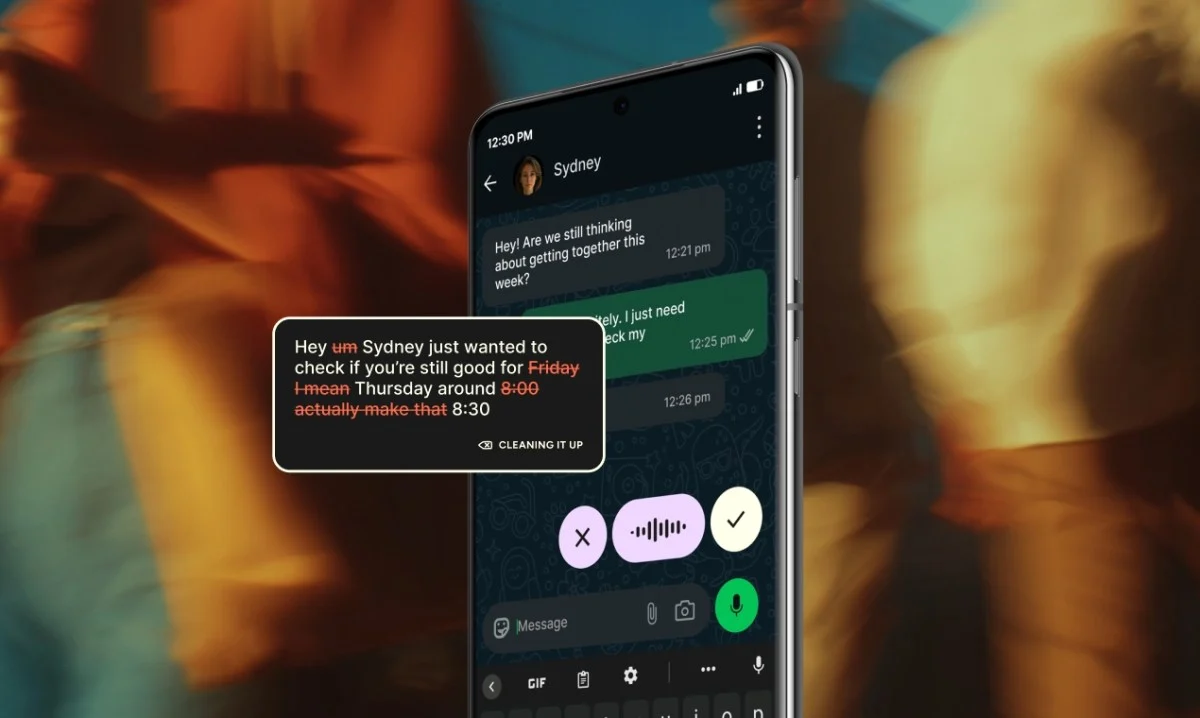
Wispr, an AI dictation startup, secured $280 million in Series B funding in August 2026, boosting its valuation to $2 billion. This investment fuels the company's expansion beyond core dictation into broader AI-powered productivity tools and new voice hardware, aiming to enhance human-computer interaction.
This latest funding round brings Wispr's total capital raised to over $361 million. The capital infusion arrives amid increasing competition in the voice AI space, prompting Wispr to diversify its offerings. The company's strategic shift signals a move towards creating a more comprehensive intelligence layer for human-AI interactions.
What Drives Wispr's Expansion?
Wispr's expansion is driven by a strategy to evolve beyond basic dictation, addressing user needs in adjacent areas like meeting transcription and integrating with new hardware. This strategic pivot aims to establish Wispr as a leading provider of ambient voice computing solutions rather than just a dictation tool, as competition intensifies in the core market.The company is now pushing into meeting transcription with a new note-taker tool. This positions Wispr in direct competition with existing tools like Granola, Fireflies, and Read AI. The note-taker provides summaries and action items, enhancing productivity for users.
Wispr also forms partnerships with hardware makers, including the Oasis ring, enabling users to dictate without speaking loudly. This move signifies an effort to integrate voice AI into a wider array of devices, extending its accessibility and usability.
Last month, Wispr launched Wispr Interface Labs under Ariya Rastrow. Rastrow, an early contributor to Amazon Alexa, now leads this lab to explore new interfaces for human-computer interaction. This initiative underscores Wispr's ambition to innovate beyond current voice AI capabilities.
How Does Wispr Address Quality Concerns?
Wispr addresses recent user concerns about dictation quality by launching Canto, a new proprietary speech model designed to significantly reduce word error rates. This model specifically targets challenging audio conditions, aiming to provide more accurate transcription and improve overall speech understanding for users.
The company's new Canto model aims to cut error rates from over 30% to between 5% and 10% in difficult environments such as those with background noise or strong accents. This improvement directly responds to user reports of a quality dip in Wispr Flow's dictation output over recent weeks.
The development of Canto, Wispr's first proprietary speech model, highlights its commitment to enhancing core technology alongside its market expansion. This dual focus on accuracy and new applications is critical for its long-term growth and competitiveness.
| Metric | Previous Performance | Canto Model Performance |
|---|---|---|
| Word Error Rate (Difficult Conditions) | Over 30% | Between 5% and 10% |