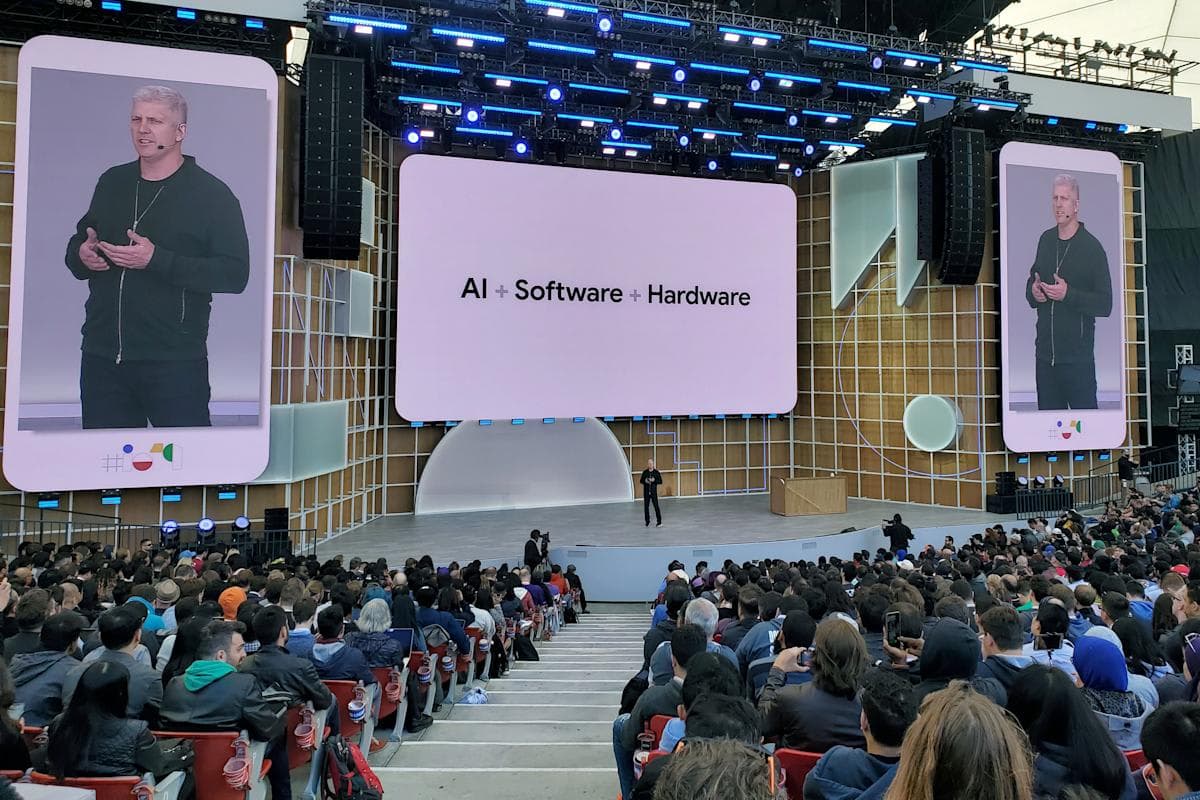
Google I/O 2026, scheduled for May 19 and 20, will showcase the company's latest advancements with a significant focus on artificial intelligence across its product ecosystem.
The annual developer conference is set to unveil major updates to its Gemini AI models and provide deeper insights into Android's future, including a potential unified platform merging ChromeOS.
This emphasis comes as Google navigates increasing competition in the digital ad space, with Meta projected to surpass its global ad revenue by the end of 2026, according to eMarketer forecasts.
What Official Announcements to Expect
Google officially confirmed that AI breakthroughs will dominate the agenda at I/O. The company plans to share "AI breakthroughs and updates in products across the company, from Gemini to Android, Chrome, Cloud and more," as stated in a blog post in February.This includes discussions on agentic coding and new Gemini model updates, often accompanied by live product demonstrations. The initial schedule for the event highlights sessions on critical developer platforms like Google Play and Firebase. There will also be deep dives into the Gemma open model family and Flutter, an open-source app development framework.
Notably absent from the current schedule are dedicated sessions for Android XR, suggesting these announcements might be reserved for a later stage or a more significant reveal.
This year's focus signals Google's strategic response to a shifting market. While the core of I/O remains developer-centric, the pervasive integration of AI reflects a company-wide push to embed intelligence into every user interaction and developer tool.
Beyond the Official Agenda
Beyond the confirmed agenda, analysts anticipate significant revelations concerning the next iteration of Google's mobile operating system, likely Android 17. Developers require lead time to adapt their applications, making I/O a crucial platform for early announcements, even as Google shifts towards more frequent Pixel Drops and incremental Android updates.However, the biggest potential reveal is a project codenamed "Aluminium OS." This initiative aims to unify ChromeOS and Android into a single platform, a move that could fundamentally reshape Google's computing ecosystem. Leaks earlier this year provided a first glimpse of this combined interface, making I/O an ideal venue for its public introduction.
On the AI front, expectations include the unveiling of Gemini 4 and further details on the Veo text-to-video model. There's also anticipation around Project Astra, Google's vision for a universal AI assistant designed to interact with users across various modalities.
While new Pixel phones or watches are typically reserved for a dedicated hardware event later in the year, such as those in August or October, an Android XR device could make an appearance. This would position Google to compete in the growing extended reality market. The broader business context for Google is shifting.
Reuters reports that Meta is projected to overtake Alphabet in global digital advertising revenue by the end of 2026. This competitive pressure from Meta, which is forecast to reach $243.46 billion in net worldwide ad revenue compared to Google's projected $239.54 billion, underscores Google's imperative to diversify its AI monetization strategies beyond traditional ads.
The company's Google Cloud segment reported a 48% year-over-year revenue increase in Q4, reaching $17.7 billion, highlighting a successful avenue for growth outside its core advertising business.
Finally, Google also confirmed that starting June 15, 2026, it will begin penalizing websites that engage in "back button hijacking" by potentially demoting them in search rankings, according to Ars Technica. This move reinforces user experience standards across the web, aligning with Google's broader efforts to maintain a healthy digital ecosystem.
Analysis: The AI Imperative
Google I/O 2026 clearly demonstrates Google's commitment to embedding AI at the core of its entire product suite, from developer tools to consumer devices. The strategic emphasis on Gemini, Android, and Cloud reflects a direct response to both market opportunities and competitive threats.By focusing on foundational AI advancements and a unified operating system, Google aims to solidify its platform advantage.
The company's push to diversify revenue streams, particularly through Google Cloud, positions it to weather shifts in the digital advertising landscape. The eventual success will hinge on its ability to translate these AI breakthroughs into compelling user experiences and robust developer tools that drive adoption and foster innovation.