The delay challenges Sony's traditional console release cycles, signaling a strategic adaptation to a volatile supply chain. Consumers can expect a broader range of PlayStation hardware, though pricing will likely reflect the higher manufacturing costs impacting the industry.
What's Driving the Delay and Price Hikes?
The primary factor pushing the PlayStation 6 launch beyond its historical seven-year console cycle is a severe global shortage of high-bandwidth memory (HBM) and DDR-class RAM chips. This scarcity directly results from the explosive growth of generative AI data centers, which prioritize these components, driving up prices for consumer electronics. Digital Trends reports this competition means Sony faces direct challenges from AI giants for essential hardware.
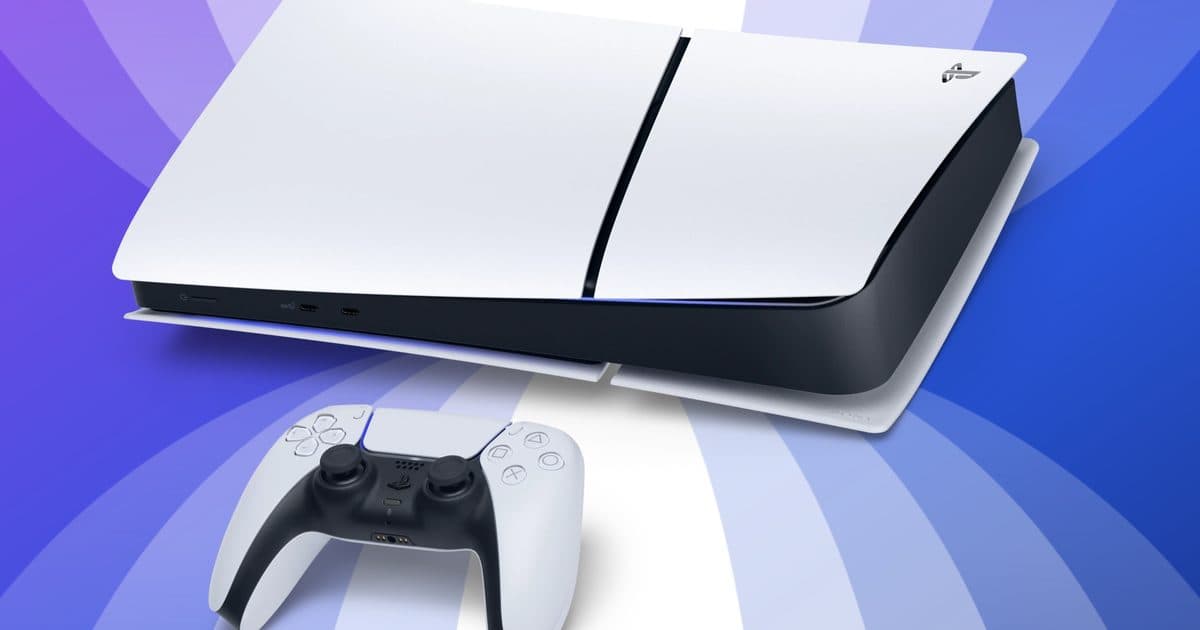
In anticipation of these rising costs, Sony recently increased prices across its current lineup. Effective April 2, 2026, the PS5 with a disc drive now sells for $649.99 (up $100), the PS5 Digital Edition for $599.99 (up $100), the PS5 Pro for $899.99 (up $150), and the PlayStation Portal for $249.99 (up $50). Sony attributed these hikes to "continued pressures in the global economic landscape" and escalating component costs. This move sets a precedent for potentially higher price points for the PS6 generation, with some flagship models rumored to approach $999.
This memory crisis impacts the PS6 directly, as it is rumored to feature up to 32GB of DDR7 RAM. Such an advanced memory configuration puts Sony in direct competition with AI industry demands, making a baseline $600 console price difficult to achieve.
Sony's Multi-Device Strategy and Hardware Innovations
To mitigate pricing challenges and broaden market appeal, Sony is reportedly adopting a multi-device hardware strategy for the next generation. This approach includes:
- PS6 Lite: A less powerful, more affordable version, estimated to cost between $350 and $500.
- PS6 Flagship (Project Orion): The standard, top-tier console, potentially priced from $699 to $999.
- PS6 Handheld (Project Canis): A dedicated, native companion handheld device, rumored to compete with the Nintendo Switch 2, with an expected price between $400 and $500.
The flagship PS6, codenamed "Orion," is anticipated to leverage a custom AMD Zen 6 architecture and RDNA 5 graphics. It could feature 7-8 x Zen 6c and 2 x Zen 6 LP cores, targeting 4K 120FPS or 8K 60FPS output. A critical upgrade is the inclusion of up to 32GB of DDR7 memory, a substantial leap from the PS5's 16GB of GDDR6, designed to eliminate data-streaming bottlenecks in demanding games. Ray tracing performance is expected to see a 6-12x improvement over the PS5.
Further innovation comes from Sony's partnership with AMD, focusing on "Project Amethyst." This collaboration aims to integrate "Neural Arrays" for built-in AI upscaling (PlayStation Spectral Super Resolution 2.0 or PSSR 2.0) and "Radiance Cores" for advanced lighting effects. Sony Interactive Entertainment CEO Hideaki Nishino noted that "the future of the platform is top of mind," suggesting a continued push for next-generation advancements.
The rumored PS6 handheld, "Project Canis," is expected to be a dockable device, akin to the Nintendo Switch. Leaker KeplerL2 suggests it will feature a 15W SoC (System on Chip) on 3nm architecture, offering power between that of the Xbox Series S and Xbox Series X. This would allow it to natively run PS5 games, albeit at lower resolutions or frame rates.
Next-Gen Gaming and AI Integration
Beyond raw power, the PS6 era will embrace artificial intelligence as a core feature. PlayStation Spectral Super Resolution 2.0 (PSSR 2.0) is already rolling out for the PS5 Pro, using neural networks to enhance image clarity and reduce visual artifacts. The PS6 will likely introduce hardware-level AI frame generation to minimize input latency.
Sony is also exploring AI-driven gameplay assistance. A patent details an AI "ghost assistant" that could monitor user gameplay and offer dynamic, on-screen tips or help. This aligns with broader industry trends, such as Xbox's Gaming Copilot. The company also seems to be experimenting with a "buttonless" gamepad design, though its practicality remains a point of speculation.
Full backward compatibility is highly anticipated, allowing existing PS4 and PS5 game libraries to run on the new hardware. The base PS6 might launch as a digital-first console to manage costs, with a detachable disc drive sold separately. Gamers can expect optimized versions of titles like Grand Theft Auto 6, a new Uncharted entry, or an unannounced Naughty Dog title to serve as flagship PS6 launch experiences.