The artificial intelligence race intensifies, demanding staggering capital investments and redefining how tech companies operate. OpenAI projects its computing-power spending to reach $121 billion by 2028, contributing to an anticipated burn of $85 billion that year, illustrating the immense infrastructure demands of frontier AI, according to Tech Startups. This shift moves leading AI firms closer to capital-intensive infrastructure businesses rather than traditional software companies. The current tech landscape reveals AI moving beyond virtual interfaces into the physical world, facing intense regulatory scrutiny, and navigating complex geopolitical challenges. From in-car AI integrations to microscopic robots and a reconfigured hardware supply chain, the industry confronts a collision between ambitious technological advancement and real-world constraints.
AI's Escalating Costs and Infrastructure Demands
The economics behind frontier AI are proving to be immense. Wall Street analysts are re-evaluating companies like OpenAI and Anthropic, recognizing them as infrastructure businesses with massive capital needs and long monetization arcs. This changes investor expectations, shifting the focus from quick software margins to long-term infrastructure plays. GPU rental costs continue to rise due to AI-driven demand, with no signs of easing. Constraints in chips, power, and facility space keep the market tight, even as new capacity comes online. This persistent shortage impacts everything from large-scale training runs to startup experimentation.This infrastructure cycle is driving significant revenue increases across the supply chain. Foxconn reported a 29.7% year-over-year jump in first-quarter revenue, primarily from strong demand for AI products in its cloud and networking segments. This demonstrates that AI infrastructure benefits extend beyond chip designers like Nvidia to manufacturers assembling the systems and hardware required for deployment. Microsoft is also making substantial infrastructure bets, with a planned $10 billion investment in Japan. This initiative supports local AI infrastructure buildout, cybersecurity cooperation, and aims to train one million engineers and developers by 2030, according to Tech Startups. These investments highlight how AI expansion is increasingly local, political, and infrastructure-heavy, rather than purely cloud-native.
Physical AI and Automotive Integration
AI is increasingly integrating into daily life and physical systems. Apple CarPlay now supports voice-based interaction with ChatGPT through recent iOS and app updates. While restricted to audio-first experiences, this expands conversational AI into the car dashboard, making vehicles another front in the AI interface competition.
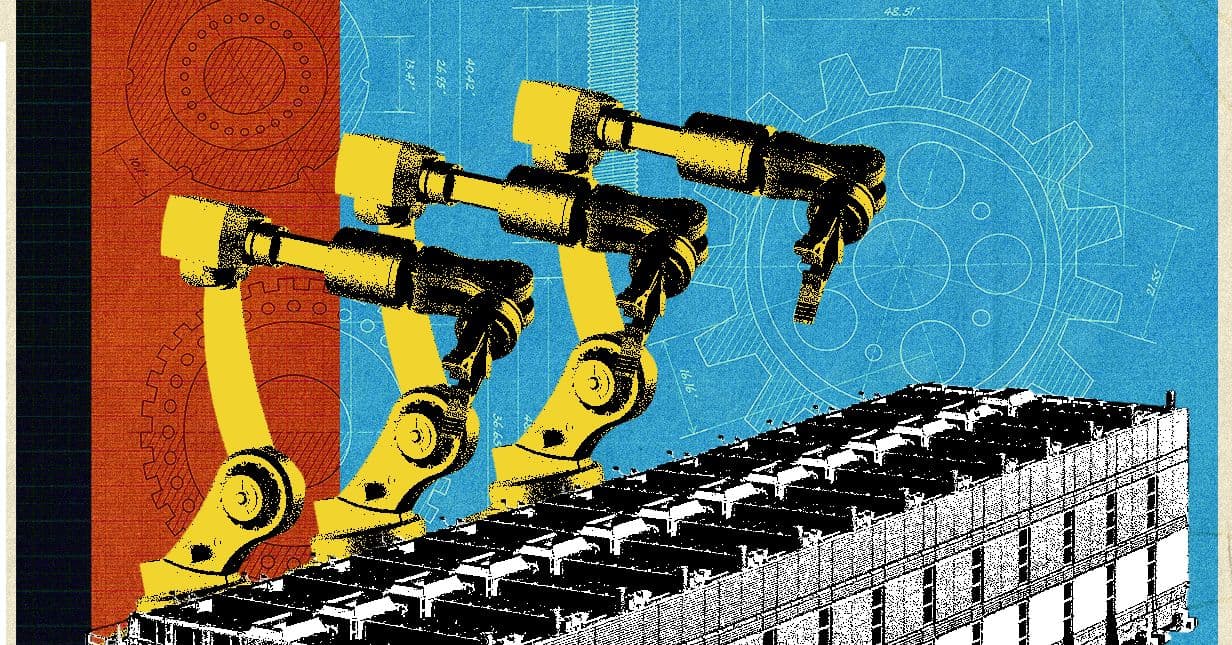
Japan is emerging as a critical testbed for physical AI, with AI-powered robots deployed in factories and warehouses. Driven by labor shortages and demographic shifts, this real-world application shows how automation must work outside the lab. If successful, Japan could provide a blueprint for industrial economies adopting robotics at scale in logistics, manufacturing, and healthcare. Even microscopic 3D-printed robots, as small as single-celled organisms, are demonstrating movement and navigation without motors or electronics. These devices, developed by researchers at Leiden University, achieve lifelike behavior through their physical shape and environmental feedback. This frontier research suggests future medical robotics may rely on "intelligence" built into material behavior itself. The automotive sector is particularly impacted by AI's advance. U.S. auto regulators closed their investigation into Tesla's "Actually Smart Summon" feature after software fixes addressed minor property damage incidents. This case underscores that software-defined vehicles are regulated as living platforms, requiring continuous updates and edge-case performance improvements to satisfy safety agencies. Apple is also strengthening its hardware ecosystem for serious AI use, with Apple Silicon Macs now supporting AMD and Nvidia external GPUs for AI workloads. This enables more flexible local AI compute, bolstering the Mac's role in developer environments seeking privacy and portable compute.
Regulatory Pressures and Geopolitical Dynamics
Regulatory bodies are actively shaping the AI landscape. California is solidifying its role as a primary testing ground for AI regulation in the U.S. Recent measures include an executive order to raise AI procurement standards for state business and legislative efforts addressing chatbot harms. Given California's market size, its rules often become de facto national standards, influencing product policy and model governance across the country. Geopolitical tensions are increasingly impacting major tech firms. Iran's Islamic Revolutionary Guard Corps has reportedly threatened U.S. tech companies operating in the Middle East, including Apple, Google, and Microsoft. This situation illustrates how data centers, regional offices, and cloud facilities are becoming entangled with state-level conflict, making global tech infrastructure inseparable from national security. Simultaneously, defense tech startups in the U.S. and Europe are seeing increased demand and commercial opportunities as governments seek new technologies amid Middle East conflicts, according to CNBC.Enterprise AI Maturation and Shifting Hardware Landscape
Enterprise AI is transitioning from experimental pilot programs to daily operational integration, with more software incorporating task-specific agents and improved workflow integration. This shift means vendors must demonstrate clear ROI and robust risk controls for durable adoption, moving past initial "curiosity spending" toward disciplined procurement. Startups like ThinkLabs AI are securing significant funding, raising $28 million to apply physics-informed AI to electrical-grid modeling, per Tech Startups. This addresses the critical bottleneck of power infrastructure for AI data centers, drawing capital to the infrastructure layer, not just applications. Softr, a no-code startup, has launched an AI Co-Builder that allows non-technical users to generate integrated business applications from plain language descriptions. This merges no-code capabilities with AI, potentially accelerating the development of internal operations software and departmental applications. The server CPU market is also undergoing a significant transformation. Arm-based CPUs are projected to power 90% of AI servers built around custom processors by 2029, according to Counterpoint Research and reported by Tech Startups. Hyperscalers like AWS, Google, Microsoft, and Meta increasingly favor in-house Arm designs for AI workloads due to power efficiency and workload-specific optimization. This trend highlights the redefinition of "tech company" to include deep infrastructure and hardware expertise.
Research Sources