
The plugin employs a token-efficient 3-layer workflow for memory search, drastically reducing processing costs. It starts with a compact index (50-100 tokens per result), then allows chronological context retrieval, and finally fetches full observation details (500-1,000 tokens per result) only for relevant IDs. This structured approach ensures optimal resource use, a vital consideration as companies like Meta and Shopify reportedly evaluate employees based on their AI token consumption, according to The Wall Street Journal.
This innovation transforms Claude Code into a more capable AI agent, akin to a personal digital assistant that can "remember" past interactions. The emergence of such sophisticated AI bots is a significant trend, allowing them to gather information, write reports, and even send messages, as The New York Times reports. Claude-Mem’s automatic operation and fine-grained context configuration underscore this shift towards autonomous, context-aware AI tools.
The introduction of persistent memory through Claude-Mem positions Claude Code as a stronger contender in the rapidly evolving AI coding market. This market, once pioneered by companies like Cursor, a company valued at $29.3 billion, faces intense competition from Anthropic's bolstered offerings. While developers often use both Cursor and Claude Code for distinct tasks, Claude-Mem addresses a key area where Claude Code can gain an advantage.
Anthropic also launched Claude Code Channels, enabling users to interact with the AI via Telegram and Discord. This move counters the appeal of open-source projects like OpenClaw, which thrived on "always-on" persistence through messaging apps, per VentureBeat. These developments highlight a broader "trillion-dollar race" to automate various aspects of professional and personal life, accelerating the integration of AI into everyday tasks.
The ability for AI like Claude Code to remember context between sessions is crucial for sustained productivity and complex project management. This advancement impacts not only individual developers but also corporate strategies, where the efficient use of AI tokens is becoming a metric for employee performance. For instance, OpenAI's GPT-5.4 reportedly processes 5 trillion tokens per day, showcasing the sheer scale of AI-driven coding activity.
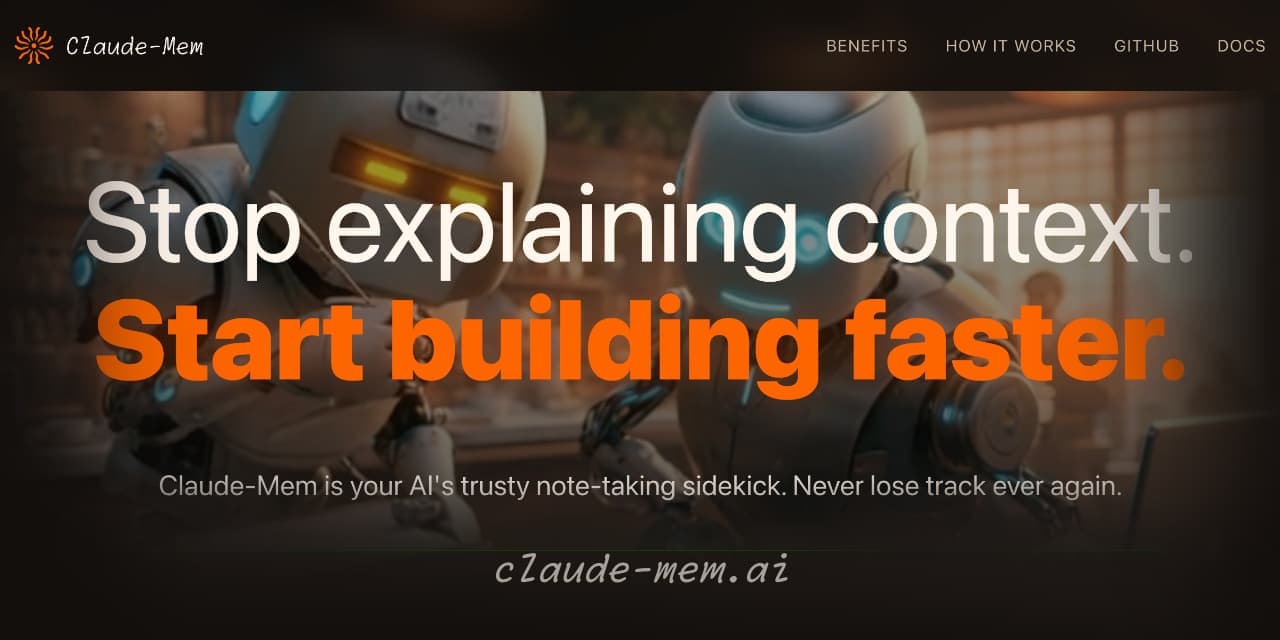
Claude-Mem is a plugin for Anthropic's Claude Code that gives the AI persistent memory for coding sessions. It captures and compresses Claude's actions, then injects relevant context into future interactions. This prevents repetitive context setting and boosts developer velocity.
Claude-Mem retains knowledge across sessions, transforming Claude Code into a knowledgeable partner. It remembers project specifics, past debugging attempts, and previous code modifications. This makes subsequent interactions more efficient, especially now that Claude Code can directly control macOS environments.
Claude-Mem integrates via `/plugin marketplace add thedotmack/claude-mem`. It operates through five lifecycle hooks: SessionStart, UserPromptSubmit, PostToolUse, Stop, and SessionEnd. These hooks observe Claude's interactions, which are stored in an SQLite database and semantically summarized using Chroma vector database for intelligent retrieval.
Claude-Mem uses a 3-layer workflow pattern for memory search, achieving approximately 10x token savings. Claude uses specialized MCP tools: `search` generates a compact index of results, `timeline` provides chronological context, and `get_observations` fetches full details only for relevant IDs.
Claude-Mem runs a Worker Service with a web viewer UI on port 37777, offering real-time memory streams. This allows developers to monitor Claude's observations and memory recall process.
More insights on trending topics and technology