The Agent Plugins Standard, supported by Resend Skills as of August 13, 2026, defines an open, vendor-neutral way to package agent skills and MCP servers into portable plugins for use with any AI coding tool. This standard unifies disparate plugin formats across the AI agent ecosystem.
Before this standard, AI coding tools often required vendor-specific manifests and setup processes for plugins that combined MCP and agent skills. The new specification simplifies development by offering a unified packaging format. This enables broader compatibility and easier integration for AI agents.
The Agent Plugins Standard: Core Components and Collaboration
The Agent Plugins Standard 1.0.0 provides a unified framework for packaging agent tools and domain-specific expertise, allowing AI coding agents to acquire specialized functions irrespective of the underlying platform. This specification was published by a TSC of Core Maintainers from leading technology companies.Agent plugins extend AI coding agents with specialized skills. For instance, AWS agent plugins enable agents to handle AWS-specific tasks, such as generating infrastructure or estimating costs using real-time pricing data. These plugins allow agents to scan codebases and provide recommendations directly within the development environment.
The standard was developed through a collaborative effort. Key contributors include Amazon, Cursor, GitHub, Microsoft, OpenAI, and Vercel. Google is also joining this group as a Core Maintainer and integrating plugin support into its products.
How does the standard simplify plugin development?
The Agent Plugins Standard simplifies development by offering a vendor-neutral format for packaging agent components, which removes the need for disparate, tool-specific manifests. This standardized approach uses a structured directory with specific files, enabling clients to universally recognize and integrate new capabilities without complex custom setups.
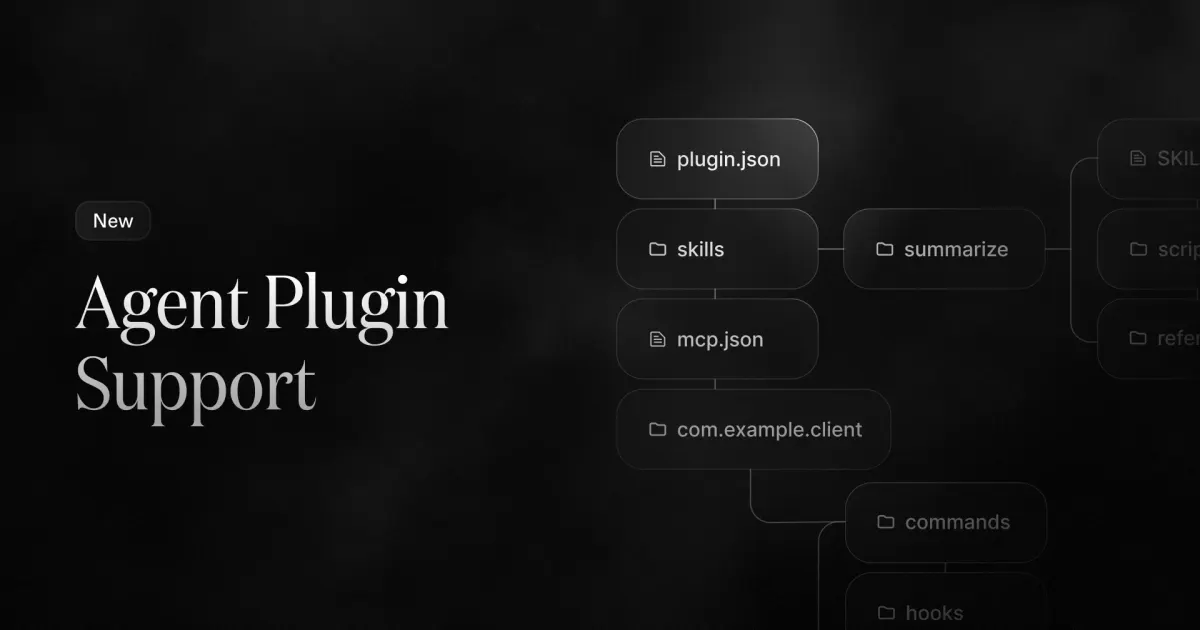
The standard specifies a directory structure. This includes a `plugin.json` file for plugin details, a `skills/` directory for agent skills, and an `mcp.json` file for MCP configuration in the root of the plugin directory. This unified structure allows any compatible AI client to install the plugins easily.
Current installations like Claude, Cursor, and GitHub Copilot will continue to function. New plugin installations follow client-specific instructions, such as using the command palette in VS Code. VS Code 1.110 notably introduced agent plugins as installable bundles of chat customizations.
Aspect | Before Agent Plugins Standard | With Agent Plugins Standard |
|---|---|---|
Plugin Manifest | Vendor-specific for each AI tool | Single, vendor-neutral `plugin.json` |
Packaging Format | Inconsistent, tool-dependent | Standardized directory structure (`skills/`, `mcp.json`) |
Compatibility | Limited to specific AI tools | Broad, cross-client compatibility |
Development Effort | Duplicate work for multiple tools | Write once, deploy anywhere |